
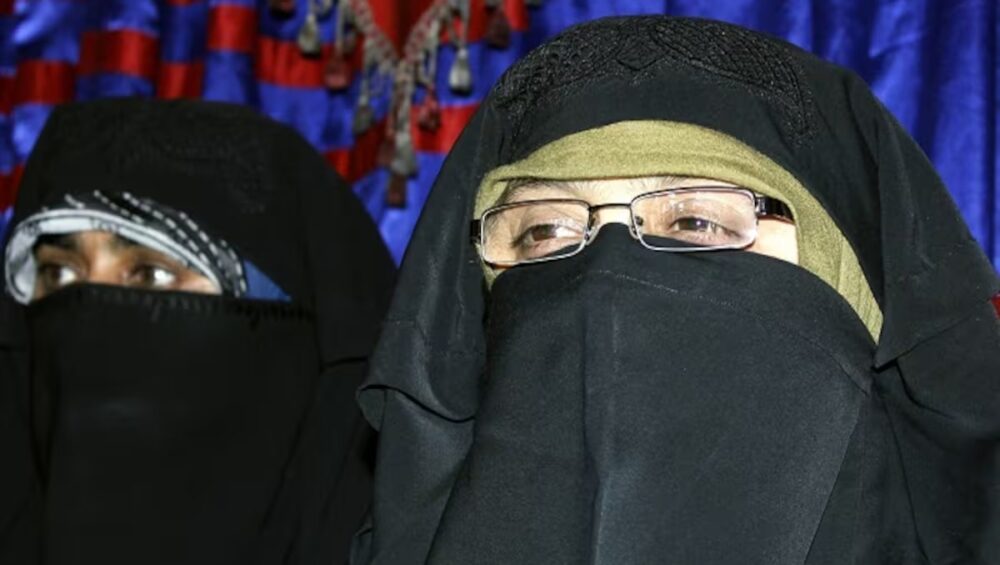
Legal Forum for Kashmir (LFK) expresses grave concern over the continued detention of Kashmiri political prisoners in Indian prisons, including the sentencing of Asiya Andrabi, Head of Dukhtaran Millat, to life imprisonment, and the imposition of 30-year sentences on Nahida Nasreen and Sofi Fehmeeda. These convictions, secured under expansive security legislation, reflect a pattern in which political resistance is recast as criminality within an increasingly securitised legal framework.
These developments cannot be understood as isolated judicial outcomes. Rather, they form part of a broader process in which legal doctrine is actively reshaped and deployed to serve state objectives. Through expansive definitions of “terror,” prolonged pre-trial detention, and procedural frameworks that dilute evidentiary safeguards, the law is not merely applied but reconfigured. In this sense, legality itself becomes a site of governance, where legal form is mobilised to produce and normalise new political realities in Indian occupied Jammu and Kashmir.
Over time, this has led to a situation in which exceptional measures are routinised within the ordinary legal order. The continued use of sweeping security laws, alongside administrative and legislative interventions, reflects a structure in which legal protections are selectively suspended while coercive powers are systemically expanded. Such a framework enables the consolidation of control not outside the law but through it, thereby facilitating demographic change, suppressing dissent, and restructuring the region’s political character under the facade of legality.
The resulting pattern raises serious concerns under international human rights law, particularly with respect to arbitrary detention, fair trial guarantees, and the erosion of fundamental freedoms. The imposition of life sentences amounting to incarceration until natural death, coupled with prolonged detention without meaningful judicial safeguards, highlights the urgency of international scrutiny. These practices must also be assessed in light of longstanding international commitments affirming the right to self-determination.
LFK emphasises the necessity of engaging available international legal and institutional mechanisms, including United Nations human rights bodies and special procedures, to address these patterns of structural repression. The situation of Kashmiri political prisoners is not merely a question of individual cases, but of a broader legal architecture that demands sustained international attention.
LFK calls upon the international community, legal scholars, and practitioners to intensify documentation, critical engagement, and legal action concerning the evolving use of law in Jammu and Kashmir. Where legal frameworks are deployed to silence political expression and reorder society, the responsibility to respond cannot remain confined within domestic jurisdictional limits.